
Cherish Cherish

What Is a Car Garage Lift and Which Type Is Best?

Time:2026-10-16 Author:Amelia
0%

Choosing a Car Garage Lift is not simply about raising a vehicle off the floor. It is about creating safer working space, improving storage, and matching equipment to your garage. A compact two-post lift may suit brake repairs and suspension work. A four-post lift can provide steadier support for storage or long-term parking. Scissor lifts offer a lower profile, but they may limit access beneath some vehicles.

Real garage conditions matter. Ceiling height, concrete thickness, vehicle weight, and door clearance can change the right choice. A lift that looks ideal online may feel impractical beside a crowded workbench. Measure carefully. Then measure again. A few missing centimeters can affect installation and daily use.

Safety should guide every comparison. Reliable manufacturers publish rated capacities, platform dimensions, locking systems, and installation requirements. Professional installers can inspect the slab, confirm anchoring, and explain routine maintenance. Operators should use approved lifting points and check locks before working underneath a vehicle. Small habits prevent serious mistakes.

This guide examines the main garage lift types, their strengths, limitations, and suitable applications. It also considers portability, maintenance, user experience, and total ownership cost. No lift is perfect. A two-post model may offer excellent access, yet demand precise positioning and sufficient ceiling space. A four-post design may feel more forgiving, but it occupies more floor area. The best decision depends on your vehicle, garage, budget, and confidence with equipment. Careful comparison remains more valuable than an attractive specification sheet.
What Is a Car Garage Lift and Which Type Is Best?

What Is a Car Garage Lift?

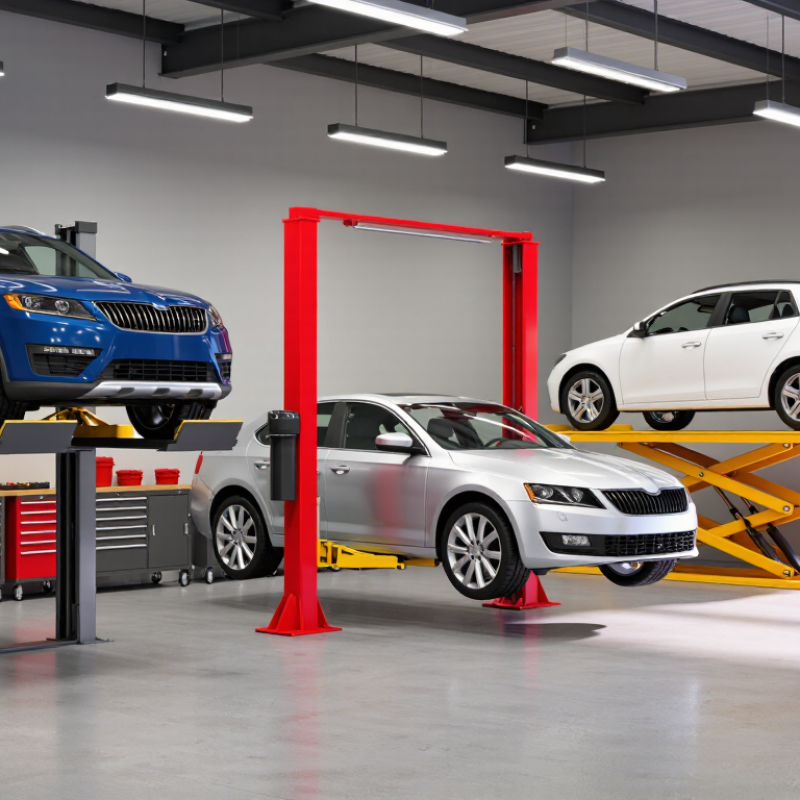
A car garage lift is a mechanical system that raises a vehicle above the floor. It creates working space underneath the chassis and can also add parking room. Most lifts use posts, arms, ramps, or platforms to support the vehicle. Two-post lifts offer broad underside access, while four-post lifts provide stronger platform support. Scissor lifts save floor space but may limit access around the wheels.

Choosing the best type depends on your ceiling height, floor strength, vehicle weight, and intended work. A professional installer should check concrete thickness, anchor positions, and lifting points before installation. Never rely only on the lift’s maximum capacity. The vehicle’s balance matters too. An uneven load can make a stable-looking setup unsafe. I have learned that convenient equipment can still be a poor choice when measurements are rushed.

Tips: Measure your tallest vehicle with the garage door open. Leave clearance above the roof and enough room around each post. Read the load chart carefully, then inspect locks, cables, arms, and pads before every use. Use approved support locks, not improvised blocks. Keep children and unnecessary tools away from the lifting area. Even careful owners can overlook a small floor crack. Have the structure assessed before drilling.

How Does a Garage Lift Work?

A car garage lift raises a vehicle to create safe working or storage space underneath. Most models use hydraulic pressure, electric screws, or a combination of both. In a hydraulic lift, an electric pump pushes fluid into cylinders. The cylinders extend and move the lifting arms or platform upward. Strong steel cables or synchronized mechanisms help keep both sides level.

The operator places the vehicle carefully on marked contact points before lifting. When the control is pressed, the motor starts and the platform rises slowly. Mechanical safety locks usually engage at set heights. These locks carry the load if hydraulic pressure changes. To lower the vehicle, the operator raises it slightly, releases the locks, and opens a controlled valve. The platform then descends at a limited speed. Never rush this step.

Installation affects performance as much as the lift itself. A qualified technician should check the concrete thickness, floor condition, ceiling clearance, and electrical supply. The vehicle’s weight must remain below the rated capacity, including tools or stored equipment inside it. Before each use, inspect cables, hoses, arms, pads, and locking points. Small details matter. In real garages, poor positioning causes many avoidable problems. I would not rely on a lift that moves unevenly, leaks fluid, or makes unusual sounds. A second check may feel excessive, but it can reveal a loose pad or damaged lock before the vehicle is raised.

What Is a Car Garage Lift and Which Type Is Best?

A garage lift raises a vehicle above the floor so technicians can access the wheels, suspension, brakes, and underbody. The chart compares representative rated lifting capacities for common residential garage lift designs.

How it works: An electric-hydraulic power unit drives cylinders that lift the vehicle through arms, platforms, or scissors. Two-post lifts provide strong underbody access, four-post lifts offer greater stability and storage convenience, while scissor and portable mid-rise lifts are useful where ceiling height or floor space is limited. Always verify the lift’s certified capacity, vehicle lifting points, ceiling height, and floor requirements before installation.

What Are the Main Types of Garage Lifts?

What Is a Car Garage Lift and Which Type Is Best?

Garage lifts generally fall into four practical types: two-post, four-post, scissor, and portable mid-rise lifts. Two-post models support a vehicle by its frame points. They leave the wheels hanging, making brake, suspension, and tire work easier. Four-post lifts support the tires on long runways. They feel steadier for storage, wheel alignment, and heavier vehicles, but they use more floor space.

Scissor lifts rise from a compact platform beneath the vehicle. Their low profile suits smaller garages, although access can become limited around the center underside. Portable mid-rise lifts offer useful height for oil changes and wheel service. They are easier to move, yet they usually cannot provide full standing clearance. S&P Global Mobility reported that the average U.S. vehicle age reached 12.6 years in 2024. Older vehicles often need suspension and underbody repairs, so lift access matters more than simple storage. The best type depends on the work, not only the lifting height.

Tips: Measure ceiling height, door clearance, floor thickness, and vehicle weight first. Check the lift’s rated capacity against the vehicle’s loaded weight. Look for documented testing and professional installation guidance from recognized industry safety organizations. Never rely on appearance alone. A lift can look solid and still fit the wrong anchor pattern. This is where many buyers, including experienced owners, make costly assumptions. Surface condition also matters, especially in older concrete garages.

How to Choose the Best Garage Lift for Your Needs?

A car garage lift raises a vehicle for maintenance, inspection, or storage. The best choice depends on ceiling height, vehicle weight, floor strength, and working habits. According to Grand View Research’s 2024 Automotive Lift Market report, the global market was valued at approximately 2.7 billion dollars in 2023. That growth reflects wider demand for efficient repair spaces, not proof that every lift suits every garage.

Start with the vehicle’s gross weight rating, not its empty curb weight. Choose a lift with a comfortable safety margin. A 7,000-pound lift may suit many passenger vehicles, while heavier trucks require more capacity. Two-post lifts provide excellent underside access but need suitable concrete and careful arm positioning. Four-post lifts offer easier parking and storage, although their runways can obstruct some service work. Scissor lifts save space, but their platforms may limit access around wheels and suspension components. ANSI/ALI ALCTV safety requirements emphasize rated capacity, mechanical locks, warning labels, and installation quality. Check those details before comparing prices. Measure twice.

The ceiling should allow the vehicle, lift, and technician’s working clearance. The International Building Code commonly uses 4,000 psi concrete for demanding garage applications, but existing slabs still require professional verification. I would not rely on appearance alone. A floor can look solid and still contain weak areas, cracks, or unsuitable thickness. Local inspection guidance matters, and installation errors remain an uncomfortable possibility. Safety matters. Choose the lift that matches your actual vehicles, available space, and maintenance routine—not the most impressive specification sheet.

What Safety and Installation Factors Should You Consider?

A car garage lift raises a vehicle above the floor for repairs, storage, or cleaning. Common designs include two-post, four-post, scissor, and in-ground lifts. Each type changes access, stability, and space requirements. A two-post lift exposes the wheels well, while a four-post model supports the tires and feels more stable for storage. Scissor lifts can fit tighter garages, but their platforms may limit access beneath the vehicle.

Safety begins with the garage itself. Measure ceiling height, door movement, vehicle height, and nearby walls before choosing equipment. A lifted car can strike lights, beams, or the door mechanism. Check the lift’s rated capacity against the vehicle’s actual weight, not an estimate from memory. The concrete slab also matters. It should meet the manufacturer’s thickness and strength requirements, with no serious cracks near anchor points. Do not assume older concrete is suitable.

Installation needs careful planning. Anchors must be installed to the specified depth and tightened correctly. Hydraulic lines, cables, and locking mechanisms require a close inspection before use. Keep the lifting area clear, place the vehicle at its balance points, and engage mechanical locks before working underneath. Wear eye protection and use wheel chocks when appropriate. Local building and electrical rules may apply, so a qualified installer should verify the setup. I have seen rushed installations fail at the measurement stage, not during lifting. That is an easy mistake to repeat. Regular inspections should check anchors, hoses, locks, and uneven movement. Never rely on the hydraulic system alone.

What Is a Car Garage Lift and Which Type Is Best? - What Safety and Installation Factors Should You Consider?

Lift Type Typical Rated Capacity Typical Maximum Rise Main Advantages Main Limitations Garage and Vehicle Suitability Installation and Safety Priorities Best Use Case
Two-Post Lift Typically 7,000–10,000 lb (3,175–4,536 kg); confirm the exact model rating. Approximately 70–78 in (1.78–1.98 m). Provides good access to wheels, suspension, brakes, and the underside; usually uses less floor space than a four-post lift. Requires correct vehicle balance and lifting-point placement; less convenient for long-term vehicle storage. Suitable for many cars, light trucks, and SUVs when the lift arms and adapters match the vehicle. Needs an engineered concrete slab, accurate anchor installation, adequate ceiling height, arm-lock engagement, and correct lift points. Frequent repair and maintenance work where underbody access is the priority.
Four-Post Lift Typically 7,000–9,000 lb (3,175–4,082 kg); higher-capacity models are available. Approximately 60–75 in (1.52–1.91 m), depending on runway and post design. Stable platform, simple vehicle loading, and useful for stacking or storing a second vehicle. Runways can restrict access to some underbody components; occupies more floor area. Works well for cars, SUVs, and many light trucks, especially when storage is important. Check runway width, wheelbase range, approach clearance, locking positions, chocks, and ceiling clearance. Garage storage, detailing, inspections, and occasional service work.
Scissor Lift Commonly 6,000–10,000 lb (2,722–4,536 kg), depending on configuration. Approximately 36–72 in (0.91–1.83 m); low-rise versions lift less. Compact footprint, open access around the vehicle, and many models can be moved or stored when lowered. The center structure may obstruct some components; maximum height and access vary considerably by design. Useful where ceiling height or floor space limits the use of posts. Confirm pad position, vehicle weight distribution, hydraulic hose condition, mechanical locks, and platform stability. Tire, brake, exhaust, detailing, and general service tasks in smaller garages.
Portable Mid-Rise Lift Often 6,000–8,000 lb (2,722–3,629 kg), subject to the specific design. Approximately 24–48 in (0.61–1.22 m). Lower initial space requirement, generally easy to store, and suitable for many wheel and brake jobs. Usually cannot provide full standing-height access; some models limit access to the vehicle center. Best for passenger cars and light vehicles within the published wheelbase and weight limits. Use on a level, sound surface; engage mechanical locks, prevent movement, and keep the lift centered under the vehicle. Home garages needing occasional maintenance without a permanent installation.
In-Ground Lift Commonly 9,000–18,000 lb (4,082–8,165 kg), depending on the system. Often approximately 60–72 in (1.52–1.83 m). Minimal above-floor obstruction and excellent access around the vehicle. Requires major construction, drainage planning, corrosion control, and professional installation. More appropriate for new construction or commercial facilities than typical residential garages. Requires structural engineering, pit waterproofing, electrical planning, load testing, and compliance with applicable regulations. High-use professional workshops with suitable building infrastructure.

Safety and Installation Checklist

Factor What to Verify Before Use Why It Matters
Rated Capacity The vehicle weight, axle loads, adapters, accessories, and lift configuration are within the published limits. Exceeding capacity can cause structural or hydraulic failure.
Concrete Slab Thickness, strength, reinforcement, age, flatness, and anchor locations meet the lift installation instructions. Anchors depend on sound concrete and correct embedment; a generic thickness assumption is not sufficient.
Ceiling and Door Clearance Measure total lift height, vehicle height, overhead doors, lighting, sprinklers, and stored items. Insufficient clearance can damage the vehicle, building, or lift.
Vehicle Lift Points Use the vehicle manufacturer's recommended points and the correct adapters or contact pads. Incorrect contact can deform the body or allow the vehicle to shift.
Mechanical Locks Confirm that locks engage evenly and never rely on hydraulic pressure alone for long-term support. Mechanical locks provide secondary support if hydraulic pressure changes.
Electrical and Hydraulic Systems Use the specified electrical circuit, inspect hoses and fittings, and keep controls dry and accessible. Correct installation reduces shock, fire, leak, and unexpected-movement risks.
Operating Area Keep people, tools, and loose materials away from pinch points and beneath a moving vehicle. Most lift injuries involve crushing, falling objects, or unexpected vehicle movement.
Inspection and Maintenance Follow the lift manual and applicable safety standards for inspections, lubrication, cable or chain checks, and periodic servicing. Routine inspection helps identify wear, corrosion, leaks, loose fasteners, and damaged safety components.

Note: Capacity, rise height, concrete requirements, and clearances vary by model. Always use the current installation and operating instructions for the selected lift and consult a qualified installer or structural professional when required.

FAQS

How does a garage lift raise a vehicle?

An electric pump pushes fluid into hydraulic cylinders. The cylinders extend and lift the platform or arms. Steel cables or synchronized parts help both sides rise evenly. Mechanical locks support the vehicle if pressure changes.

How should a vehicle be positioned before lifting?

Park it on the marked contact points. Keep the weight balanced across the lifting arms or platform. Check that doors, tools, and stored equipment add no unexpected weight. Small positioning errors can become serious.

What happens when the lift lowers a vehicle?

The operator raises the platform slightly and releases the mechanical locks. A controlled valve then lowers the vehicle slowly. Never rush this step. Watch for uneven movement.

How much weight capacity should a garage lift have?

Compare the lift rating with the vehicle’s gross weight rating. Include passengers, tools, fuel, and stored equipment. Choose a comfortable safety margin. Memory is not a reliable scale.

Which lift design suits different garage needs?

Two-post lifts provide strong underside access for maintenance. Four-post lifts support tires and work well for storage. Scissor lifts save floor space but may limit wheel access. The best design depends on your actual work.

What garage measurements should be checked before installation?

Measure ceiling height, vehicle height, door movement, and nearby obstacles. Include the technician’s working clearance. Check lights, beams, and door mechanisms above the vehicle. Measure twice.

Can any concrete floor support a garage lift?

No. The slab must meet the lift’s required thickness and strength. Cracks near anchor points can create serious concerns. Older concrete may look strong but still need professional verification.

What should be inspected before every use?

Check cables, hoses, lifting arms, pads, anchors, and mechanical locks. Look for leaks, unusual sounds, or uneven movement. Keep the lifting area clear. I would stop using a lift that behaves differently.

What safety steps matter while working beneath a raised vehicle?

Engage the mechanical locks before entering underneath. Do not rely on hydraulic pressure alone. Use wheel chocks when appropriate and wear eye protection. A second check may feel excessive, but it can find loose parts.

Conclusion

A Car Garage Lift is a mechanical system designed to raise a vehicle above the ground, creating easier access for maintenance while maximizing limited garage space. It works by using posts, lifting arms, platforms, or other support structures powered by hydraulic, electric, or mechanical mechanisms. Once the vehicle is correctly positioned and secured, the lift raises it to a suitable height and holds it with locking systems, allowing safer and more convenient work underneath or additional vehicle storage below.

The main types include two-post lifts, four-post lifts, scissor lifts, and portable or low-rise models. Choosing the best option depends on your garage’s ceiling height, floor strength, available space, vehicle weight, lifting height, and intended use. Before installation, confirm the lift’s capacity, required clearance, anchor points, power requirements, and compatibility with your vehicle. Always follow the manufacturer’s instructions, inspect components regularly, use approved locking features, and ensure the vehicle is balanced and securely positioned before lifting or lowering.

Amelia

Amelia

Amelia is a seasoned marketing professional with a wealth of expertise in our company’s core offerings. With an unwavering passion for driving growth and innovation, she plays a pivotal role in shaping our marketing strategies and enhancing brand visibility. A key aspect of her responsibilities......