
Cherish Cherish

China Best Coating Paint Line Manufacturer?

Time:2026-10-01 Author:Isabella
0%

Choosing the China Best Coating Paint Line Manufacturer requires more than comparing price lists or factory photographs. The right partner must match your formulation, capacity, quality targets, and local compliance needs. China’s National Coatings Industry Association reported approximately 35.77 million tonnes of coatings production in 2023. That scale reflects strong manufacturing experience, but it also creates wide differences between suppliers. Some specialize in architectural coatings. Others focus on industrial, powder, water-based, or high-solid systems.

Market research supports the need for careful evaluation. Grand View Research valued the global paints and coatings market at about USD 206 billion in 2023. Its report expects continued growth through 2030, driven by construction, transport, infrastructure, and industrial maintenance. This growth increases demand for efficient equipment, stable dispersion, accurate dosing, and lower material waste. A reliable Coating Paint Line should include practical controls for mixing speed, temperature, viscosity, filtration, filling, and cleaning. It should also provide traceable testing records and clear after-sales support.

The best choice is not always the largest factory. It is the supplier that understands your process. Ask for production references, equipment layouts, material compatibility tests, and commissioning records. Watch the details. Does the agitator prevent dead zones? Can operators clean the vessel safely? Is the control system easy to maintain? These questions reveal more than a polished brochure.

No supplier is perfect. Even experienced manufacturers may need improvement in documentation, response time, or customization. Buyers should verify every claim through factory audits and sample trials. A careful decision protects product consistency, operating costs, and long-term production reliability.
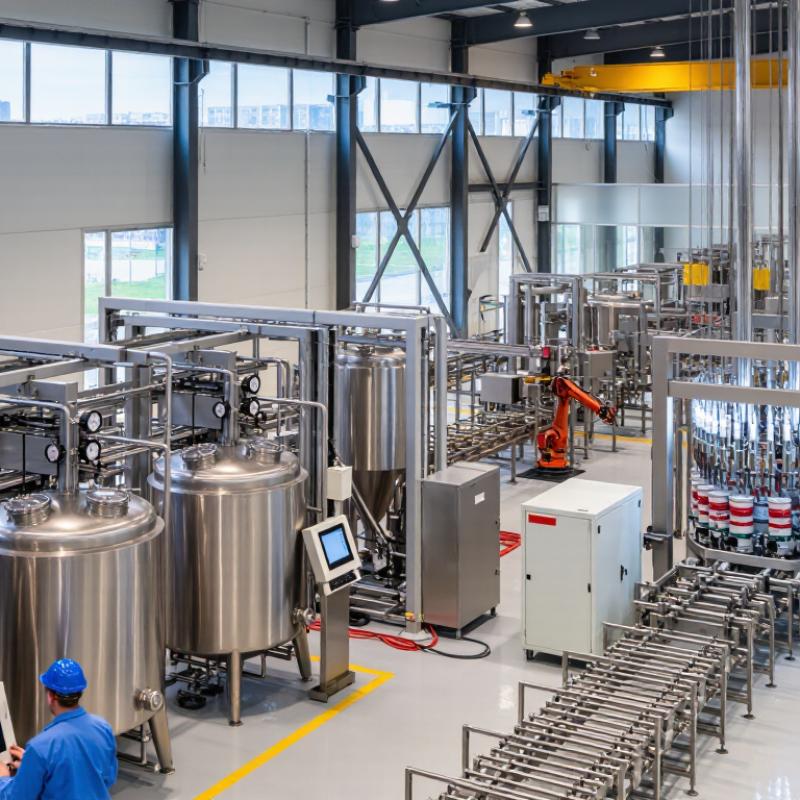
China Best Coating Paint Line Manufacturer?

What Is a Coating Paint Line Manufacturer?

China Best Coating Paint Line Manufacturer?

A coating paint line manufacturer designs, builds, and validates complete finishing systems. It is not simply a paint equipment seller. The system may include pretreatment tanks, drying ovens, spray booths, conveyors, curing ovens, filtration, and control software. Each section must match the product material, coating chemistry, production speed, and factory layout.

The demand is substantial. Grand View Research reported that the global paints and coatings market reached about USD 206.56 billion in 2023. Its forecast expects continued growth through 2030.

This growth increases pressure on manufacturers to reduce overspray, energy use, and coating defects. A qualified line manufacturer should provide process calculations, coating thickness tests, temperature records, and documented commissioning results. Operators should also receive practical training, not only a manual.

Details matter. A stable conveyor prevents uneven film thickness. Correct oven airflow reduces orange peel and poor curing.

Automated spray control can improve repeatability, but automation is not magic. Poor pretreatment still produces weak adhesion.

The uncomfortable truth is that some projects focus too heavily on equipment price. That can create higher maintenance costs later. ISO 12944 guidance also shows why substrate preparation and corrosion protection must be selected together.

A reliable manufacturer studies samples, measures results, and adjusts the design when factory conditions change. No line is perfect. Continuous review remains necessary.

How Coating Paint Production Lines Are Designed and Built

China Best Coating Paint Line Manufacturer?

How Coating Paint Production Lines Are Designed and Built

A reliable coating paint production line begins with the formulation, not the equipment catalog. Engineers review viscosity, pigment loading, batch size, solvent content, and cleaning requirements. These details determine the mixer type, vessel volume, grinding method, and transfer pump. Water-based coatings may need different seals and corrosion protection than solvent-based products. Small details matter.

During design, the process is divided into weighing, dispersion, grinding, blending, filtration, and filling. Each stage needs controlled flow and suitable material contact surfaces. Stainless steel vessels are common, but the grade must match the chemicals used. A practical layout reduces lifting, spills, dead zones, and unnecessary pipe length. Operators should see gauges clearly and reach valves safely. The best drawings are reviewed by production workers, not engineers alone.

Building the line requires accurate fabrication, careful alignment, and documented testing. Suppliers should verify motor loads, temperature control, electrical protection, grounding, ventilation, and applicable safety standards. Trial batches can reveal problems that drawings miss. A pump may shear the product too aggressively. A filter may clog earlier than expected. These are not unusual failures. They should be recorded, corrected, and tested again before handover. Automation improves repeatability, but it cannot replace trained operators or sound maintenance practices.

China Best Coating Paint Line Manufacturer? - How Coating Paint Production Lines Are Designed and Built

Production Line Area Main Equipment Primary Function Typical Design Data Key Quality or Safety Controls
Raw Material Storage Tanks, silos, drums, bag-dumping stations and dust collectors Store and feed pigments, resins, solvents, water, additives and fillers Tank volume is commonly selected from batch size, delivery frequency and material density; liquid storage often uses level indication and overflow protection Material compatibility, spill containment, grounding, ventilation, labeling and controlled access
Raw Material Weighing and Dosing Load cells, metering pumps, screw feeders and weighing vessels Measure ingredients according to the approved formulation Accuracy depends on material type; liquid and powder dosing systems are normally configured separately Recipe control, calibration records, barcode or batch identification and interlocks against incorrect charging
Premixing High-speed disperser, premix tank and variable-speed agitator Wet pigments and powders into the liquid phase before fine dispersion or grinding A typical disperser uses adjustable speed and an impeller selected for viscosity, solids loading and tank geometry Vortex control, temperature monitoring, guarded rotating parts and dust-minimizing powder addition
Dispersion or Grinding Bead mill, basket mill, sand mill or three-roll mill Reduce agglomerates and improve pigment distribution, color development and stability Equipment selection is based on product viscosity, pigment type, target fineness, throughput and heat generation Cooling circuit, pressure monitoring, seal inspection, screen protection and prevention of media contamination
Let-Down and Final Blending Low-speed blending tank, anchor agitator and dosing system Add remaining resin, solvent, water and additives while adjusting the final formulation Agitation is usually gentler than premixing to limit air entrainment and unwanted foam Controlled addition sequence, temperature control, closed transfer and batch traceability
Filtration Bag filters, cartridge filters, basket strainers or inline screens Remove oversize particles, agglomerates and foreign matter before filling Filter selection depends on coating type, allowable pressure drop, target cleanliness and flow rate Differential-pressure monitoring, filter-change procedures and hygienic or cleanable product-contact surfaces
Vacuum Deaeration Vacuum mixing tank or inline deaeration unit Reduce entrained air that can cause pinholes, foam, filling errors or unstable density Vacuum level and residence time are chosen according to viscosity, foam tendency and solvent or water content Vacuum relief, condenser or solvent recovery where required, and protection against excessive foaming
Quality Control Laboratory Viscometer, fineness gauge, color measurement equipment, density cup and gloss meter Verify that each batch meets its approved specification before release Common checks include viscosity, density, color, fineness of grind, gloss, drying behavior and hiding power Approved test methods, retained samples, instrument calibration and documented release criteria
Filling and Packaging Piston, gear, gravimetric or flow-meter filling machine; lid closer and labeler Fill cans, pails, drums or other approved containers and prepare products for shipment Filler design depends on viscosity, container size, target weight, product foaming and required changeover time Fill-weight checks, leak inspection, batch coding, label verification and container compatibility
Automation and Data Management PLC, HMI, sensors, variable-frequency drives and production database Coordinate recipes, equipment sequencing, alarms, batch records and operating parameters Automation scope ranges from local control panels to integrated batch-management systems User permissions, emergency stops, alarm history, data backup and validated operating procedures
Utilities and Environmental Systems Electrical distribution, compressed air, cooling water, ventilation and waste-treatment equipment Provide stable operating conditions and manage emissions, waste and workplace exposure Utility capacity is calculated from connected load, simultaneous demand, process heat removal and local regulations Explosion-risk assessment where applicable, solvent vapor control, fire protection, noise control and wastewater management
Note: The listed design data represents common engineering considerations for water-based, solvent-based and industrial coating production lines. Final equipment sizes and process parameters must be confirmed through formulation trials, material safety assessments, applicable regulations and the required production capacity.

Key Criteria for Choosing a Chinese Paint Line Manufacturer

China Best Coating Paint Line Manufacturer?

Key Criteria for Choosing a Chinese Paint Line Manufacturer

Choosing a Chinese coating paint line manufacturer requires more than comparing prices. Start with production capacity, coating materials, workpiece dimensions, and required finish quality. A reliable supplier should explain conveyor speed, spray booth design, curing oven temperature, and energy consumption clearly. Ask for layout drawings and process data before approving any quotation. Vague answers may create expensive delays later.

Practical experience matters. Request factory references, test records, and videos showing similar equipment in operation. Check whether the manufacturer can manage installation, commissioning, operator training, and spare parts support. Electrical systems, ventilation, emissions control, and workplace safety should follow the regulations of your destination market. I have seen attractive proposals fail because the oven could not maintain stable temperatures. The lowest price is not always the lowest cost. Still, even detailed specifications can miss real production problems.

Tips: Visit the workshop if possible. Inspect welding, wiring, insulation, and control cabinets. Test sample parts using your actual coating. Confirm delivery milestones, warranty terms, and technical documents in writing. Ask how quickly support responds. A small pilot test may reveal more than a polished presentation. Be willing to revise your assumptions.

Quality Standards, Technologies, and Customization Options

China Best Coating Paint Line Manufacturer?

Choosing a coating paint line manufacturer requires more than comparing prices. Quality standards should guide every decision. Ask for documented quality systems, material traceability, and inspection records. ISO 9001 alignment can support consistent production, but certificates alone do not prove performance. Check coating thickness, color difference, adhesion, and curing results on real workpieces. A practical factory test is essential.
Modern technologies improve control and reduce waste. Pretreatment systems can manage cleaning and surface conversion more evenly. Electrostatic spray equipment helps create a uniform film on metal parts. PLC controls, temperature sensors, and automatic powder recovery can stabilize daily operation. I have found that small sensor errors sometimes create large defects. The line must be easy to inspect and maintain.
Tips: Define your workpiece size, target output, coating material, and available floor space before requesting a design. Ask for test panels, energy data, spare-parts lists, and operator training. Confirm how the system handles color changes and irregular shapes. Customization may include conveyor speed, booth dimensions, curing temperature, ventilation, and automation level. A perfect line rarely exists. Leave room for adjustment after real production begins.

How to Evaluate Suppliers, Costs, Installation, and After-Sales Support

China Best Coating Paint Line Manufacturer?

Evaluating a coating paint line supplier requires more than comparing catalog prices. Visit the production site, if possible. Inspect welding quality, control cabinets, conveyor alignment, and oven insulation. Ask for recent customer references with similar workpieces and output targets. A reliable supplier should provide layout drawings, utility requirements, test records, and clear equipment specifications.

Cost comparisons often hide important details. Request an itemized quotation covering pretreatment tanks, spray booths, curing ovens, exhaust systems, shipping, installation, commissioning, training, and spare parts. Confirm energy consumption and expected production capacity. A low initial price may exclude electrical work or foundation preparation. That omission can become expensive. Also check payment milestones and acceptance criteria before signing.

Installation quality directly affects coating consistency. Confirm who supervises assembly, calibrates temperature zones, and trains operators. Ask how trial production will be measured, including film thickness, adhesion, color variation, and defect rates. After-sales support should include response times, remote troubleshooting, maintenance schedules, and replacement-part availability. Written warranty terms matter more than friendly promises. Some suppliers communicate well before delivery, then respond slowly after commissioning. That possibility deserves attention. Leave room for process changes, because the first production trial may reveal awkward loading, uneven airflow, or cleaning delays.

FAQS

What does a coating paint line manufacturer provide?

A complete finishing system, not only individual painting equipment. It may include pretreatment tanks, drying ovens, spray booths, conveyors, curing ovens, filtration, and controls. Each section must suit the product material, coating chemistry, factory layout, and production speed.

Why is pretreatment important?

Pretreatment removes contaminants and prepares the surface for coating. Poor preparation can cause weak adhesion, even with advanced spraying equipment. The surface tells the truth.

How can a supplier’s technical ability be evaluated?

Request layout drawings, utility requirements, equipment specifications, and commissioning records. Inspect welding, control cabinets, conveyor alignment, and oven insulation. Visiting the production site can reveal details photographs hide.

What should an itemized quotation include?

It should list tanks, spray booths, ovens, exhaust systems, shipping, installation, training, and spare parts. Confirm electrical work, foundations, energy use, and production capacity. A low price may omit expensive work.

How should coating quality be tested?

Measure film thickness, adhesion, color variation, curing temperature, and defect rates. Temperature records should cover different oven zones. Test real workpieces.

Does automation guarantee better coating results?

No. Automated spray control can improve repeatability, but it cannot repair poor pretreatment. Stable conveyors and correct airflow remain essential. Automation is not magic.

What installation support should a manufacturer provide?

The supplier should supervise assembly, calibrate temperature zones, and train operators. Trial production should check loading, airflow, cleaning time, and coating defects. The first trial may expose awkward problems.

What should after-sales support include?

Confirm response times, remote troubleshooting, maintenance schedules, spare-part availability, and written warranty terms. Do not rely only on friendly promises. Support can become slower later.

Why should buyers review the line after commissioning?

Factory conditions and production needs may change after launch. A line may later need airflow adjustments, loading changes, or improved cleaning routines. No line stays perfect. Continuous review is sensible.

Conclusion

Choosing the right Coating Paint Line manufacturer in China requires more than comparing equipment prices. A qualified manufacturer should understand the complete production process, including material preparation, mixing, dispersion, filtration, filling, and packaging. Production lines should be designed around the product type, required capacity, factory layout, automation level, and future expansion plans. Strong engineering capabilities also help ensure stable operation, efficient energy use, safe workflows, and consistent coating quality.

When evaluating suppliers, buyers should review manufacturing experience, quality control procedures, technical standards, customization capabilities, and the reliability of key components. Clear communication about specifications, delivery schedules, installation, operator training, maintenance, spare parts, and after-sales service is equally important. A detailed quotation should explain equipment configuration, project costs, commissioning responsibilities, and warranty terms. By assessing both technical performance and long-term support, companies can select a dependable partner and build a coating production system that delivers consistent results and sustainable value.

Isabella

Isabella

Isabella is a dedicated marketing professional with a sharp focus on driving brand growth and engagement through strategic content creation. With an extensive background in digital marketing, she combines her passion for storytelling with her keen understanding of industry trends to deliver......