
Cherish
Choosing a Powder Coating Spray Line in 2026 requires more than comparing equipment prices. The right decision begins with your products, coating chemistry, production volume, and available floor space. A small steel bracket line needs different airflow, curing capacity, and conveyor speed than a high-volume architectural profile line. Measure the details. Part dimensions, hanging points, color changes, and oven temperature stability can determine long-term performance.
Kevin Biller, a respected powder-coating consultant and industry author, has emphasized, “Powder coating is a system, not just a spray gun.” That principle remains important when evaluating modern equipment. A reliable Powder Coating Spray Line should connect pretreatment, drying, spraying, curing, filtration, and controls into one consistent process. Look for even powder coverage, accessible maintenance areas, efficient reclaim systems, and accurate temperature monitoring. These features reduce waste and help prevent defects such as orange peel, pinholes, and uneven gloss.
Do not chase automation blindly. It can improve repeatability, but poor part loading or weak pretreatment will still create failures. Energy efficiency matters too, especially when ovens run for many hours each day. Yet projected savings may look better on paper than on the factory floor. Ask suppliers for test panels, production references, service response times, and realistic operating data. Inspect the control cabinet. Watch a color change. Discuss operator training. A dependable line should fit your actual workflow, not an idealized brochure. This guide examines the practical criteria, hidden costs, and common mistakes involved in selecting a Powder Coating Spray Line for 2026.
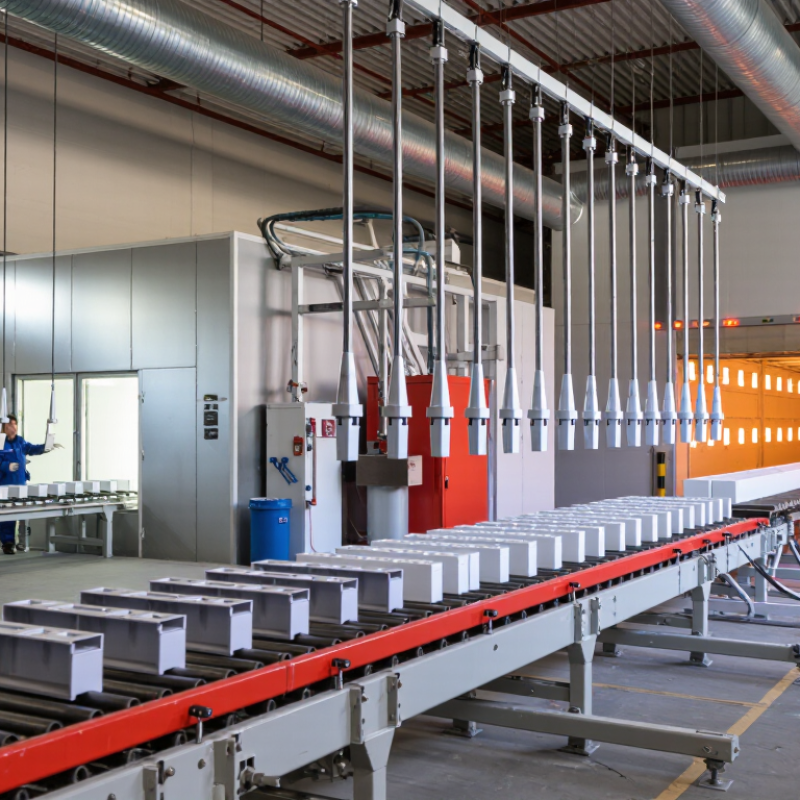
Define your production requirements before comparing spray-line suppliers. Record daily output, part dimensions, substrate types, coating thickness, and required finish quality. A line for small brackets differs greatly from one handling two-meter frames. Measure the largest part, not the average one. Also document peak demand, shift patterns, and acceptable changeover time. Short runs need flexibility. High-volume work needs stability.
Powder chemistry will influence booth design, curing, and recovery equipment. The Powder Coating Institute reports that powder systems can achieve transfer efficiencies above 95% under controlled conditions. That figure is useful, but it is not automatic. Poor grounding, unsuitable gun settings, or clogged filters can reduce it quickly.
The U.S. Environmental Protection Agency identifies powder coating as a low-VOC finishing method. Still, pretreatment chemicals, oven fuel, and plant ventilation require separate evaluation. Energy data must cover the entire line.
A 2024 Grand View Research report estimated continued growth in the global powder coatings market through the decade. This suggests stronger demand, but market growth alone should not dictate your investment. Ask for actual parts-per-hour results using your geometry and powder. Check oven temperature uniformity at the coldest load position. Review color-change procedures, maintenance access, and powder reclaim limits. A spreadsheet can still lie. Leave room for future capacity, but avoid buying automation that your operators cannot support. Reliability often begins with modest, measurable requirements.
How to Choose a Powder Coating Spray Line in 2026?
Powder coating demand continues to expand. Grand View Research valued the global market at approximately $15.94 billion in 2023. Its report forecasts a 5.5% compound annual growth rate through 2030. This growth makes line selection more strategic, not merely technical. A manual booth suits varied batches and low volumes. An automatic booth fits stable products and repeated colors. A reciprocator helps cover long panels evenly. Robots provide flexibility, but they require stronger programming skills and maintenance discipline.
Configuration affects both quality and operating cost. A batch oven offers flexibility for mixed orders. A conveyorized oven supports higher throughput and consistent dwell time. Choose enclosed pretreatment when corrosion protection is critical. Add powder recovery when overspray is frequent. MarketsandMarkets reports that automated powder coating systems are gaining adoption because manufacturers seek consistent finishes and lower labor dependence. However, automation is not automatically better. A poorly tuned gun can waste powder faster than a trained operator.
Measure the part envelope carefully. Check hanger spacing, oven length, booth clearance, and electrical capacity. Ask suppliers to demonstrate color-change time using your actual powder. Observe film thickness at corners, recesses, and edges. A line that looks impressive on paper may struggle with small batches. That is the uncomfortable part. The best 2026 configuration may be semi-automatic, with automatic spraying and manual loading. It often balances repeatability, investment, and real production behavior.
Comparing spray line types, configurations, and automation levels
Best for low-volume production, frequent color changes, prototypes, and large or irregular parts.
A practical balance for growing production with partial automation and flexible loading or unloading.
Suitable for repeatable parts, higher volumes, controlled conveyor flow, and consistent curing schedules.
Designed for higher throughput and repeatable coverage on complex or high-volume parts.
Choosing a powder coating spray line starts with the booth, not the sales brochure. I look for stable airflow, easy cleaning, and clear visibility around the operator. A narrow booth may save floor space, but it can restrict larger parts and increase contamination risks. Grounding also deserves practical testing. Poor grounding wastes powder and produces uneven coverage. Ask for airflow measurements under real working conditions, not only empty-booth data.
The oven must match the part’s metal thickness, coating chemistry, and production speed. Temperature uniformity matters more than a high maximum temperature. Place test probes at different zones and record curing results across several loads. Conveyors should move smoothly without swinging parts through the booth or oven. Check hanger spacing, load limits, chain access, and emergency stopping points. Small mechanical problems become expensive when the line runs continuously.
Recovery systems need careful evaluation. A well-designed cyclone or filter arrangement can reduce powder waste and simplify color changes. However, recovery efficiency depends on airflow, particle size, cleaning habits, and operator training. Inspect filter access with gloves on. This sounds minor.
I once underestimated cleaning time during a line review. The equipment performed well, but changeovers took longer than expected. A written calculation may miss this reality. Request a timed demonstration using your parts, coating colors, and planned production rhythm. Leave room for maintenance access, future capacity, and human error.
How to Choose a Powder Coating Spray Line in 2026?
Choosing a powder coating spray line in 2026 requires more than comparing booth prices. Energy use should be measured per coated square meter, not only by heater rating. The U.S. Department of Energy reports that motor-driven systems consume about 69% of manufacturing electricity. This makes fan efficiency, variable-speed drives, compressed-air leakage, and oven insulation important cost controls. Ask suppliers for tested gas or electric consumption under a stated production load. Numbers without conditions mislead.
Safety deserves equal scrutiny. NFPA 33 provides requirements for spray application areas, while OSHA guidance addresses combustible dust hazards. Specify booth airflow monitoring, door interlocks, grounding verification, fire detection, and automatic shutdowns. Request commissioning records, not promises. Powder recovery also needs sealed ducting and accessible filters. A dusty ledge can become a maintenance warning. The safest design is not always the most automated one. Poorly trained operators can defeat clever safeguards.
Maintenance and growth should be priced before installation. The DOE Operations and Maintenance Best Practices Guide indicates that effective maintenance can save 5–20% in operating costs. Choose ovens with reachable burners, removable filters, diagnostic logs, and standard sensors. Design spare capacity around realistic batch forecasts. A line running at 95% capacity leaves little room for new orders or repairs. Modular guns and conveyor sections support expansion, but compatibility must be confirmed in writing. Test coating thickness, cure uniformity, color change time, and recovery rate on representative parts. Future powder formulations may require different cure windows. The equipment should accommodate that uncertainty.
How to Choose a Powder Coating Spray Line in 2026?
Supplier expertise should be tested through evidence, not polished presentations. Ask for layout drawings, airflow calculations, oven uniformity data, and documented commissioning records. Ask for evidence. A capable supplier should explain transfer efficiency, reclaim rates, coating thickness, and line speed in practical terms. The U.S. EPA’s AP-42 guidance notes that powder coating produces little or no VOC emissions, but dust control remains essential. Check booth filtration, grounding, explosion protection, and cleaning procedures against applicable safety standards. A supplier that avoids these details deserves caution.
Cost comparisons must include energy, powder loss, maintenance, downtime, and operator training. The 2024 MarketsandMarkets outlook estimates the powder coatings market will grow from about USD 15.4 billion in 2024 to USD 19.8 billion by 2029. Growth increases equipment choices, but it also makes inflated claims easier to hide. Request a total-cost model based on your actual parts, production hours, and color changes. Then challenge the assumptions. After-sales support is equally measurable: require spare-parts lead times, remote response targets, training hours, and service coverage in writing. A low purchase price can become expensive after one failed heating element. I would also request a factory acceptance test using representative workpieces. It may slow procurement. That is often worthwhile. No checklist is perfect, and supplier promises still need independent verification.
Practical evaluation benchmarks for comparing powder coating spray line proposals in 2026
| Evaluation Dimension | What to Verify | Recommended Benchmark for 2026 | Required Evidence or Test Method | Indicative Planning Data | Risk if Not Verified |
|---|---|---|---|---|---|
| 1. Supplier Expertise and Technical Capability | |||||
| Relevant Project Experience | Experience with workpiece dimensions, coating chemistry, production volume, and surface requirements similar to the planned application. | At least 3 technically comparable reference projects, preferably including one operating for more than 12 months. | Request anonymized project specifications, line layout, production rate, energy data, and acceptance-test records. | Reference validation should cover the same material family, such as steel, aluminum, or galvanized components. | High Incorrect sizing, unstable coating quality, and costly redesign. |
| Process Engineering | Ability to calculate conveyor speed, oven dwell time, booth recovery capacity, airflow, filtration, and curing requirements. | Supplier provides a complete process basis with assumptions, calculations, tolerances, and operating limits. | Review heat-load calculations, airflow balance, powder mass balance, and a process flow diagram before contract signing. | Typical conveyor speeds for industrial lines may range from approximately 1 to 20 m/min, depending on part size and curing time. | High Bottlenecks, under-cured parts, excessive powder waste, or unsafe airflow. |
| Application Flexibility | Ability to handle color changes, different powder types, complex geometries, and variable part loading. | Documented changeover procedure with defined time, powder recovery method, and contamination-control steps. | Conduct a sample changeover test using at least two contrasting colors and one difficult-to-coat part geometry. | For automated systems, practical color-change time can vary widely; a project-specific target should be written into the acceptance criteria. | Medium Cross-contamination, longer downtime, and higher powder consumption. |
| Automation and Controls | PLC, HMI, alarms, recipe management, data logging, access control, and communication with upstream and downstream equipment. | All critical operating parameters are displayed, alarmed, and recorded with user access levels. | Review the control architecture, I/O list, alarm list, backup procedure, cybersecurity responsibilities, and user-training plan. | Recommended records include oven temperature, conveyor speed, booth status, filter differential pressure, and major safety interlocks. | Medium Difficult troubleshooting and limited production traceability. |
| 2. Compliance, Safety, and Documentation | |||||
| Machine Safety Compliance | Risk assessment, guarding, emergency stops, interlocks, safe access, and technical documentation. | For machinery placed on the European market in 2026, verify applicable requirements under Directive 2006/42/EC; Regulation (EU) 2023/1230 generally becomes applicable on 20 January 2027. | Request the machinery risk assessment, Declaration of Conformity, technical file index, safety-circuit validation, and operating instructions. | Applicable legislation depends on installation location, machine configuration, and commissioning date. | High Legal exposure, delayed commissioning, or unsafe operation. |
| Explosion and Combustible Dust Controls | Powder containment, ventilation, ignition-source control, grounding, housekeeping, and hazardous-area classification. | Design should address applicable requirements such as NFPA 33, OSHA 29 CFR 1910.107, ATEX 2014/34/EU, and local fire codes where relevant. | Review hazardous-area drawings, ventilation calculations, grounding tests, filter specifications, explosion-protection measures, and cleaning procedures. | Powder accumulation must be prevented; exact dust limits and protection methods depend on the powder safety data sheet and local code. | Critical Fire, explosion, injury, or regulatory shutdown. |
| Electrical and Functional Safety | Electrical design, protective bonding, control-panel construction, emergency-stop circuits, and functional safety validation. | Verify alignment with applicable editions of IEC/EN 60204-1 and ISO 13849-1 or IEC 62061, as required by the risk assessment. | Request electrical schematics, short-circuit ratings, component certificates, safety-validation reports, and test results. | Electrical requirements vary by voltage, country, installation method, and machine architecture. | High Electrical hazards, nuisance trips, or failed inspections. |
| Environmental and Emissions Control | Powder capture, exhaust treatment, filter performance, waste handling, noise, and energy consumption. | Supplier identifies applicable local air-emission, waste, noise, and energy-efficiency requirements before final design approval. | Request airflow data, filter efficiency information, exhaust drawings, waste estimates, noise data, and environmental permit assumptions. | Powder coating normally produces very low volatile organic compound emissions compared with solvent-based coating, but particulate control remains necessary. | Medium Permit delays, workplace exposure, and higher operating costs. |
| 3. Cost, Capacity, and Total Cost of Ownership | |||||
| Capital Cost | Equipment scope, booth, recovery system, oven, conveyor, pretreatment, controls, installation, commissioning, and training. | Compare proposals using the same scope breakdown and clearly separate included, excluded, optional, and provisional items. | Use a line-item quotation with technical specifications, quantities, utility requirements, delivery terms, and payment milestones. | Indicative 2026 planning ranges: small manual or semi-automatic systems approximately USD 50,000–150,000; integrated automatic lines commonly USD 150,000–1,000,000 or more, excluding building work and taxes. | High Apparent low price followed by major variation orders. |
| Installation and Site Preparation | Foundation, ventilation, gas or electrical supply, compressed air, exhaust ducting, fire protection, drainage, and building modifications. | Site utility matrix and civil-work drawings are approved before equipment fabrication. | Request utility consumption, foundation loads, equipment footprints, duct layouts, lifting requirements, and installation responsibility matrix. | Installation and site work can add approximately 15%–35% to equipment cost, depending on facility readiness and local labor rates. | High Schedule delays and unplanned construction expenditure. |
| Energy Consumption | Oven heating method, insulation, exhaust losses, warm-up time, standby mode, and recovery of heated air. | Supplier provides an estimated energy model based on part mass, line speed, oven temperature, ambient conditions, and operating hours. | Measure gas or electrical consumption during factory and site acceptance tests under defined production loads. | Actual consumption is highly application-dependent; compare energy per coated part or per square metre rather than only connected load. | Medium Higher lifetime cost than indicated by the purchase price. |
| Powder Utilization | Transfer efficiency, overspray recovery, reclaim quality, filter losses, and color-change waste. | Supplier states a measurable powder-consumption target and defines how it will be calculated. | Perform a mass-balance test: powder purchased minus recovered powder, waste, and powder remaining in the system. | Transfer efficiency commonly depends on gun settings, part geometry, grounding, powder properties, and operator practice; avoid accepting an unsupported universal percentage. | Medium Increased material cost and inconsistent finish. |
| Capacity and Throughput | Parts per hour, maximum part envelope, maximum load, coating area, curing time, and planned operating shifts. | Rated capacity should include a realistic allowance for loading, unloading, color changes, maintenance, and quality checks. | Define acceptance capacity using representative parts and a documented first-pass yield target. | Use required output, not theoretical conveyor speed, as the primary capacity metric. | High Production targets cannot be met without overtime or additional equipment. |
| 4. After-Sales Support and Lifecycle Service | |||||
| Warranty Terms | Warranty duration, covered components, exclusions, response obligations, travel costs, and spare-part availability. | Warranty terms are stated in measurable language and cover the complete supplied system, not only individual components. | Check the warranty certificate, exclusions, remedy process, response times, and rules for commissioning or operator error. | A 12-month warranty from commissioning or 18 months from shipment is a common commercial structure; confirm the exact contractual start date. | High Disputes over defects and unexpected repair costs. |
| Technical Response Time | Remote support, troubleshooting escalation, availability of service engineers, and language or time-zone coverage. | Critical production-down issues receive an initial response within 4–8 business hours; non-critical issues within 1–2 business days. | Include service-level targets, escalation contacts, remote-access rules, and communication procedures in the contract. | Actual performance depends on geographic coverage and service-team capacity. | High Extended downtime and delayed production recovery. |
| Spare Parts and Obsolescence | Critical spare-parts list, lead times, interchangeability, software backups, and replacement plan for discontinued components. | Critical parts are identified with part numbers, recommended stock levels, and maximum delivery times. | Request a two-year spare-parts price list, electrical backups, PLC/HMI program backups, and obsolescence policy. | Maintain an initial critical-spares budget of approximately 2%–5% of equipment value, adjusted for local availability and system complexity. | Medium Long outages caused by low-cost but long-lead components. |
| Training and Documentation | Operator training, maintenance training, safety training, manuals, preventive-maintenance schedules, and troubleshooting guides. | Training is completed before handover, with competency records and documentation in the required operating language. | Verify training agenda, attendance records, maintenance checklist, calibration instructions, drawings, and software backup procedure. | At minimum, train operators, maintenance personnel, production supervisors, and safety representatives separately according to their responsibilities. | Medium Operator error, unsafe intervention, and inconsistent quality. |
| Acceptance Testing | Factory acceptance test, site acceptance test, coating quality, throughput, safety functions, alarms, utilities, and documentation. | Payment milestones are linked to objective acceptance criteria and signed test records. | Test representative parts for film thickness, adhesion, appearance, cure, throughput, color change, energy use, and emergency functions. | Typical coating verification may include dry-film thickness, adhesion testing, visual inspection, and cure verification appropriate to the powder specification. | High Disagreement over whether the line meets the purchased specification. |
| 5. Recommended Supplier-Selection Scoring Model | |||||
| Weighted Technical Score | Compare suppliers using a consistent scorecard instead of purchase price alone. | Technical capability 25%; compliance and safety 25%; total cost of ownership 20%; throughput and quality 15%; after-sales support 15%. | Score each criterion from 0 to 5, require evidence for scores above 3, and document all assumptions. | Suggested minimum qualification score: 70/100 overall, with no critical compliance criterion below the approved minimum. | High Lowest-price selection may create higher operational and compliance costs. |
Cost note: All monetary figures are indicative 2026 planning ranges in United States dollars. They are not quotations and may vary with line size, automation level, local labor, freight, taxes, building modifications, utilities, and applicable regulations.
Compliance note: The purchaser should confirm the current legal requirements in the installation country with a qualified safety, electrical, fire-protection, and environmental professional before ordering or commissioning the line.
Quality note: Coating performance should be evaluated using the powder supplier's technical data sheet and agreed test methods for film thickness, adhesion, appearance, and curing.
Start with the booth. Check airflow, visibility, cleaning access, and grounding under real operating conditions.
Measure airflow while parts and operators are inside. Confirm larger parts have enough clearance. An empty-booth test can mislead.
Match the oven to metal thickness, coating chemistry, and production speed. Test temperature uniformity across several zones and loads.
Watch parts moving through the booth and oven. Check hanger spacing, load limits, chain access, and emergency stopping points.
Review cyclone or filter performance, sealed ducting, cleaning access, and color-change time. Inspect filters while wearing gloves.
Compare energy per coated square meter. Request gas or electricity data under a stated production load, not empty-line conditions.
Look for airflow monitoring, door interlocks, grounding checks, fire detection, and automatic shutdowns. Commissioning records matter.
Choose reachable burners, removable filters, diagnostic logs, and standard sensors. Leave capacity for repairs and new orders.
Use your parts, colors, and production rhythm. Cleaning may take longer than expected. My earlier estimate missed that reality.
Choosing the right Powder Coating Spray Line in 2026 begins with a clear understanding of your production requirements, including product size, coating volume, finish quality, color changes, and available floor space. Compare different line layouts, spray technologies, conveyor designs, and automation levels to identify a configuration that balances productivity, flexibility, and investment. Pay close attention to the performance of the spray booths, curing ovens, conveyors, and powder recovery systems, since these components directly influence coating consistency and operating efficiency.
A reliable selection should also consider energy consumption, ventilation, operator protection, routine maintenance, and the possibility of future expansion. Request detailed technical specifications, installation plans, operating cost estimates, and compliance documentation from potential suppliers. Their experience, training services, spare-parts availability, warranty terms, and after-sales support are equally important. By evaluating the complete system rather than focusing only on the purchase price, manufacturers can choose a safe, efficient, maintainable, and scalable solution that supports long-term production goals.