
Cherish Cherish

Top 10 Auto Parking System Types for Global Buyers

Time:2026-10-22 Author:Aria
0%

For global buyers, choosing an Auto Parking System is a facility decision, not merely an equipment purchase. The right design must match land value, vehicle flow, building structure, climate, and local operating habits. A narrow urban site may favor a tower system. A busy hospital may need faster retrieval. Residential projects often prioritize quiet operation and predictable maintenance. These differences shape cost, capacity, safety, and user satisfaction. No single solution wins everywhere. Good decisions begin with evidence.

This guide reviews ten widely used parking system types through a buyer’s practical lens. It considers mechanical, automated, and semi-automated options. Each section will explain working principles, space requirements, capacity, retrieval experience, maintenance needs, and likely applications. Attention also goes to sensors, emergency procedures, operator training, recognized safety standards, and service availability. These details matter when a vehicle waits during rain, a sensor becomes dirty, or a replacement part crosses borders. Real projects can be less tidy than brochures suggest. Noise can surprise residents. Software integration may take longer. Projected capacity may also shrink after final circulation planning. Therefore, buyers should compare verified performance data, lifecycle costs, installation conditions, and supplier support. This guide offers a useful starting point, not a universal verdict. Some recommendations may change after a site survey or user feedback. That is part of responsible evaluation.
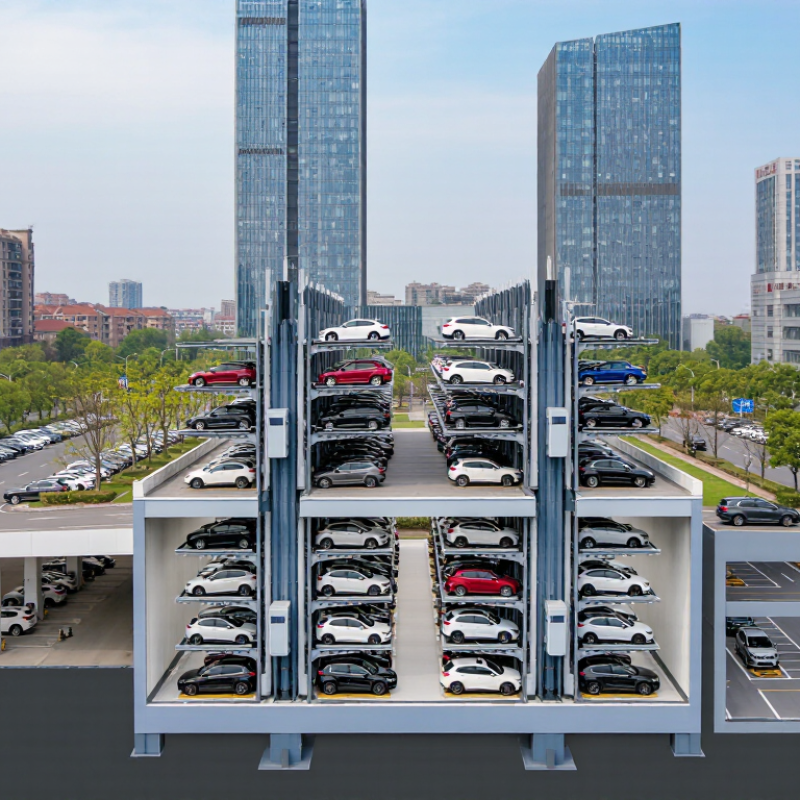
Top 10 Auto Parking System Types for Global Buyers

What Is an Auto Parking System and How Does It Work?

An auto parking system stores vehicles through guided mechanical movement instead of driver-controlled circulation. The driver stops inside an entry bay, and sensors check vehicle length, height, weight, and position. A controller then selects an available space. Lifts, conveyors, pallets, or robotic carriers move the vehicle into storage. Common types include tower, puzzle, shuttle, rotary, and automated guided vehicle systems. The layout changes, but the basic logic remains similar.

The process begins with identification and safety confirmation. Doors close only after sensors detect a correctly positioned vehicle. The system records the location digitally, then sends retrieval instructions to the controller. In the 2017 Parking Pain report, United States drivers reportedly spent about 17 hours searching for parking annually. That figure shows why automated storage can reduce circulation inside busy facilities. However, the technology does not remove every problem. A narrow entry bay, unclear instructions, or a poorly calibrated sensor can delay several vehicles.

Professional evaluation should examine throughput, retrieval time, maintenance access, emergency procedures, and local vehicle dimensions. Safety depends on redundant sensors, physical barriers, alarms, and scheduled inspections. Field commissioning experience often reveals small weaknesses, such as water near floor sensors or confusing payment screens. These details matter. A fast machine is not automatically a reliable parking system. The overlooked question is simple: can ordinary users operate it correctly during rain, darkness, or peak-hour pressure?

Top 10 Auto Parking System Types for Global Buyers

What Is an Auto Parking System and How Does It Work?

An auto parking system uses mechanical equipment, lifts, platforms, shuttles, or robotic vehicles to move and store cars with limited driver involvement. The chart compares the indicative number of parking spaces commonly served by one installation or system module.

How it works: Sensors identify the vehicle, the control system checks available space, and mechanical or robotic equipment transfers the car to a designated position. Actual capacity depends on vehicle dimensions, site layout, access requirements, safety regulations, and the selected operating configuration.

How Auto Parking Systems Are Classified by Design and Operation

Top 10 Auto Parking System Types for Global Buyers

How Auto Parking Systems Are Classified by Design and Operation

Auto parking systems are best classified by structure and vehicle movement. Tower systems stack cars vertically, while puzzle systems move platforms horizontally and vertically. Rotary systems turn vehicles around a central axis. Stacker systems lift one car above another. These designs suit narrow plots, but ceiling height and maintenance access remain critical.

Pit systems store vehicles below ground and use lifts or sliding platforms. Shuttle systems move cars along fixed rails inside multi-level garages. Automated guided vehicle systems transport cars without permanent guide tracks. Robotic parking systems use transfer devices, lifts, and positioning platforms. Lift-and-slide systems combine vertical lifting with sideways movement. Automated valet systems manage the full parking route with sensors and control software. Small differences matter.

Operation also separates these systems. Some depend on user parking, while others complete the entire parking cycle automatically. A buyer should check loading time, retrieval logic, fire protection, drainage, backup power, and local service skills. A busy apartment garage may need fast parallel retrieval. A compact commercial site may favor a tower or puzzle layout. Project teams sometimes focus too much on capacity. That can be a costly mistake. Real performance depends on vehicle size limits, peak-hour queues, noise control, and routine inspection. Site conditions can defeat an otherwise excellent design.

Top 10 Auto Parking System Types for Global Buyers — How Auto Parking Systems Are Classified by Design and Operation
Rank Auto Parking System Type Core Design Operating Principle Typical Capacity Parking Arrangement Automation Level Key Advantages Main Limitations Common Application Scenarios
1 Puzzle Parking System Two-dimensional matrix of platforms that move vertically and horizontally to create an access space. The control system moves selected platforms through programmed lifting and sliding sequences until the required vehicle reaches the entrance or exit position. Approximately 6–50 vehicles per module or installation, depending on site layout. Grid layoutMultiple levelsShared access space Fully automated or semi-automated Good space utilization; flexible configuration; suitable for irregular urban sites; generally scalable by adding modules. Retrieval time can increase when several platforms must be repositioned; regular maintenance is required for moving parts. Residential buildings, offices, hotels, mixed-use developments, and compact urban parking facilities.
2 Automated Tower Parking System Vertical steel structure with parking spaces arranged on both sides of a central lift, or around a vertical transfer mechanism. A vehicle is placed on a transfer platform at ground level. Lifts and horizontal carriers transport it to an assigned parking position and return it when requested. Approximately 20–100+ vehicles, depending on tower height, width, and number of modules. Vertical towerHigh-densitySingle or multiple lifts Fully automated Very high land-use efficiency; small ground footprint; controlled access; reduced internal driving and pedestrian movement. Requires structural design, fire-safety planning, reliable lifts, and sufficient building height; peak-hour queues may occur. Dense city centers, commercial buildings, residential developments, and sites with limited land area.
3 Rotary Parking System Vertical or horizontal loop of vehicle platforms connected by a chain or drive mechanism. The platform loop rotates in the shortest direction so that the selected vehicle is brought to the loading position. Usually 6–20 vehicles per unit, depending on the configuration and available height. Carousel layoutVertical loopCompact footprint Semi-automated to fully automated Simple operating concept; relatively small footprint; suitable for narrow sites; lower civil-work requirements than large parking buildings. Capacity is limited by the loop size; vehicle dimensions and weight must remain within specified limits; retrieval order can affect waiting time. Small commercial sites, residential properties, streetside plots, and locations requiring a compact installation.
4 Stacker Parking System Platforms are arranged vertically, with one or more vehicles stored above or behind another vehicle. A motor-driven platform raises, lowers, or slides vehicles to provide access to each parking position. Typically 2–5 vehicles per compact unit; larger systems can combine several units. Vertical stackingTwo-post or four-postIndependent or dependent spaces Semi-automated Cost-effective for small capacity increases; straightforward operation; suitable for basements, garages, and redevelopment projects. Dependent configurations may require moving another vehicle; some models require a clear ceiling height and a level floor. Private residences, dealerships, small offices, workshops, and low-capacity commercial parking areas.
5 Lift-and-Slide Parking System Combination of vertical lifting platforms and horizontal sliding platforms arranged in rows and levels. Platforms move up, down, and sideways to align the selected vehicle with the entrance or retrieval bay. Approximately 6–40 vehicles, depending on the number of levels and rows. Multi-level gridHorizontal movementVertical movement Fully automated or semi-automated Efficient use of both floor area and height; adaptable to basement and above-ground applications; can be configured around columns and walls. Moving platforms can create retrieval delays; installation requires accurate structural coordination and safety interlocks. Apartment buildings, hospitals, hotels, offices, and urban infill projects.
6 Shuttle-Based Parking System Dedicated transfer vehicles, often called shuttles, move along parking aisles while lifts serve different floors. A shuttle receives a vehicle from a transfer point, travels horizontally to the assigned bay, and places or retrieves the vehicle. Vertical lifts connect the levels. Approximately 50–500+ vehicles in large multi-level installations. Multi-level racksRail-guided shuttleMultiple aisles Fully automated High throughput and capacity; efficient use of long aisles; multiple shuttles can operate in parallel to improve performance. Higher capital cost; requires sophisticated controls, fire protection, ventilation, and coordinated maintenance access. Large residential complexes, airports, hospitals, commercial centers, and high-density public parking facilities.
7 Rack-and-Rail Parking System Fixed parking racks are served by computer-controlled rail-guided carriers or stacker cranes. A carrier travels along a rail aisle, lifts or receives a vehicle platform, and stores it in a designated rack position. Approximately 50–1,000+ vehicles in large-scale projects. Rack storageRail aisleHigh-bay layout Fully automated Very high storage density; precise inventory management; suitable for deep, multi-level structures; limited need for internal driving lanes. High engineering and construction requirements; a single carrier or lift outage may affect part of the system unless redundancy is provided. Large public garages, airports, transport hubs, city-center developments, and high-volume parking facilities.
8 AGV-Based Parking System Autonomous guided vehicles transport cars on the parking floor without fixed parking machinery at every bay. The driver leaves the vehicle in a transfer area. Automated guided vehicles lift, carry, and position vehicles in a mapped storage area, then return them on request. Approximately 100–1,000+ vehicles, depending on the building and fleet size. Flexible floor gridMobile robotsDynamic routing Fully automated Flexible layout; high storage density; vehicles can be routed around obstacles or temporary unavailable areas; suitable for large facilities. Requires advanced software, battery charging or replacement management, accurate positioning, and strong system redundancy. Airports, large public garages, logistics-oriented facilities, hospitals, and premium urban developments.
9 Palletless Robotic Parking System Robotic transfer equipment moves the vehicle directly, usually by engaging its tires or lifting beneath the chassis, without storing a separate pallet with each vehicle. After the driver parks in a handover bay, a robot positions the vehicle in a rack or floor location and retrieves it through automated routing. Approximately 50–500+ vehicles, depending on the robotic layout and number of transfer units. Robot transferDense storagePallet-free handling Fully automated Reduced pallet inventory; potentially more compact storage; automated handover and retrieval; adaptable to multi-level facilities. Vehicle handling tolerances are strict; system availability depends on robotics, sensors, software, and planned maintenance. High-end residential buildings, commercial garages, airports, hotels, and space-constrained urban projects.
10 Automated Car Elevator and Transfer System Dedicated vehicle lifts connect parking levels, while transfer tables, turntables, or conveyors move vehicles into individual spaces. The vehicle is driven into a transfer bay and is then moved vertically and horizontally by lifts and transfer equipment to its assigned parking location. Approximately 10–200 vehicles, depending on the number of levels, bays, and transfer devices. Multi-level structureVehicle liftTransfer bays Fully automated or semi-automated Useful where ramps are impractical; supports underground and multi-level layouts; can be integrated with building architecture. Lift capacity and cycle time can limit throughput; requires careful coordination of ventilation, fire safety, drainage, and emergency access. Underground garages, luxury residential buildings, hotels, office towers, and retrofit projects.
Note: Capacity ranges are indicative planning ranges. Actual performance depends on vehicle dimensions, site geometry, number of levels, equipment quantity, retrieval sequence, local codes, and the selected control configuration.

Top 10 Auto Parking System Types for Different Parking Needs

Top 10 Auto Parking System Types for Different Parking Needs

Parking demand rarely fits one solution. Site shape, vehicle volume, budget, and service speed all matter. Field assessments show that a careful layout study often saves more space than expensive equipment.

Puzzle parking systems suit small buildings with flexible storage needs.
Tower systems use vertical height and support dense urban sites.
Shuttle systems move vehicles horizontally and vertically, making them practical for medium and large garages.
Automated guided vehicle systems offer flexible routing and can adapt to irregular layouts.
Rotary parking systems work well where frontage is narrow and installation depth is limited.
Stacker systems provide a cost-conscious option for residential buildings and staff parking.
Pit parking systems hide vehicles below ground, preserving valuable surface space.
Lift-and-slide systems combine vertical lifting with horizontal movement for compact sites.
Automated valet systems reduce driving inside the facility and can improve user comfort.
Carousel systems rotate platforms into position, helping sites with repeated parking patterns.

Each type has trade-offs. Tower systems may need stronger structural planning. Pit systems require dependable drainage and careful maintenance access. Shuttle and guided vehicle systems can reduce labor, but software reliability becomes critical. Stacker systems are efficient, though retrieval may take longer during busy periods. No system is perfect. A rushed selection can create noise, delays, or difficult repairs. Engineers should review peak-hour demand, vehicle dimensions, fire protection, backup operation, and local technical requirements before choosing. Small details matter, such as a clear sensor view or enough space beside a charging vehicle.

Key Factors for Comparing Auto Parking Systems Worldwide

Top 10 Auto Parking System Types for Global Buyers

Comparing auto parking systems requires more than checking the number of parking spaces. Buyers should match each design to the site, traffic pattern, and local climate. Common options include puzzle, stacker, tower, shuttle, rotary, lift, robotic, AGV, horizontal circulation, and fully automated garage systems.

Measure vehicle height, width, weight, and turning limits before selecting equipment. A tower may save valuable land, while a puzzle system can suit a compact commercial building. Shuttle and robotic systems often improve capacity, but they need dependable software and trained maintenance teams. Review parking speed during peak hours, not only the advertised cycle time. Check emergency access, backup power, drainage, corrosion protection, noise levels, and fire safety provisions. Total cost should include installation, energy use, inspections, spare parts, and future upgrades. A low purchase price can become expensive after several years. Local technical support also matters, especially when replacement parts cross borders. Early capacity estimates are sometimes wrong. Real traffic data should challenge them.

Tips: Ask for a site-specific simulation and a clear maintenance schedule. Request references from similar climates and building types. Test the user interface with real drivers, including older users. Confirm warranty terms, response times, and operator training in writing. Leave practical clearance around entrances; crowded lanes create frustration quickly. Compare measured performance, not attractive brochures.

How Global Buyers Can Choose and Implement the Right System

Choosing an automated parking system starts with the site, not the product catalogue. Urban buyers should measure available land, traffic flow, vehicle sizes, drainage, power supply, and emergency access. A narrow basement may suit a puzzle system, while a high-rise project may require a tower system. Other options include lift-and-slide, rotary, shuttle, AGV, stacker, robotic garage, automated valet, silo, and underground parking systems.

Local conditions often decide more than advertised capacity. Check fire codes, accessibility rules, seismic requirements, and municipal approvals before signing technical documents. Ask suppliers for load calculations, maintenance schedules, response times, and references from similar climates. A coastal site, for example, needs stronger corrosion protection. Dusty environments demand careful sensor and ventilation planning. These details are easy to overlook.

Implementation should begin with a traffic simulation and a small operational trial. Test peak-hour entry, ticket recovery, emergency release, and the movement of larger vehicles. Train operators before opening day. Keep manual procedures available. Technology can fail during a power cut or software update. That is not a reason to reject automation, but it is a reason to design redundancy. Buyers should also compare ten-year costs, including electricity, inspections, spare parts, training, and downtime. Capacity figures can look impressive, yet slow retrieval may frustrate drivers every morning. A practical performance target should reflect actual user habits, not only laboratory conditions.

FAQS

How are automatic parking systems classified?

They are classified by structure and vehicle movement. Tower systems move cars vertically. Puzzle systems move platforms vertically and horizontally. Rotary systems turn around a central axis. Other designs include stacker, pit, shuttle, guided vehicle, robotic, lift-and-slide, and automated valet systems.

Which system suits a narrow urban site?

Tower and rotary systems often suit narrow plots. They use height or limited installation depth. A tower needs sufficient ceiling height and strong structural planning. A rotary layout needs careful vehicle size checks. Not always.

Are puzzle parking systems suitable for compact buildings?

Yes, they can store vehicles in flexible platform arrangements. They suit small commercial buildings and sites with limited land. However, retrieval may slow during busy periods. Clear sensor views and maintenance access remain important.

What should buyers check before selecting a system?

Measure vehicle height, width, weight, and turning limits. Review peak-hour demand, loading time, drainage, fire protection, and backup power. Also check noise, corrosion protection, service access, spare parts, and local technical skills.

Do automated systems always retrieve cars quickly?

No. Advertised cycle time may not reflect real queues. Stacker systems can take longer during busy periods. Parallel retrieval may better suit a crowded apartment garage. Real traffic data should test early capacity estimates.

How do shuttle and guided vehicle systems differ?

Shuttle systems move cars along fixed rails inside multi-level garages. Guided vehicle systems transport cars without permanent guide tracks. Guided vehicles may handle irregular layouts more flexibly. Both depend heavily on reliable software and trained maintenance teams.

What are the main maintenance concerns?

Inspect lifts, platforms, sensors, rails, drainage, and control equipment regularly. Keep access routes clear for technicians. Pit systems especially need dependable drainage. Small faults can create long delays.

How should total cost be compared?

Include installation, energy use, inspections, spare parts, training, and future upgrades. A low purchase price may become expensive later. Confirm warranty coverage and response times in writing. The cheapest option can still be the wrong choice.

What practical tests should a project team perform?

Request a site-specific simulation and references from similar climates. Test the interface with real drivers, including older users. Check entrance clearance beside charging vehicles. Compare measured performance, not attractive brochures. Mistakes happen.

Conclusion

An Auto Parking System is an integrated solution that uses mechanical equipment, sensors, software, and control interfaces to move, store, and retrieve vehicles with greater efficiency than conventional parking. By reducing the space needed for driving lanes and allowing vehicles to be arranged vertically, horizontally, or in compact layouts, these systems can improve land utilization, parking capacity, user convenience, and operational management. Their designs and operating methods vary according to site conditions, vehicle volume, construction limits, and desired automation level.

This overview introduces the top 10 Auto Parking System types for different parking needs, including systems suited to residential buildings, commercial facilities, public locations, and space-constrained urban areas. It also explains how global buyers can compare solutions by capacity, dimensions, safety features, installation requirements, maintenance demands, energy use, user experience, and total cost of ownership. By evaluating local climate, regulations, traffic patterns, project budgets, and long-term service capabilities, buyers can select and implement a reliable system that supports efficient, safe, and sustainable parking operations.

Aria

Aria

Aria is a dedicated marketing professional with a deep passion for innovative strategies and a keen understanding of our company's product offerings. With a wealth of experience in the industry, Aria excels at crafting engaging content that highlights the unique features and benefits of our......