
Cherish
Urban land is becoming harder to secure, especially near offices, apartments, hospitals, and transport hubs. The United Nations projects that 68% of the world’s population will live in urban areas by 2050. This pressure is changing how developers view parking space. An Auto Stacker can use vertical capacity, reduce driving lanes, and fit more vehicles into a limited footprint. Still, performance depends on site design, vehicle dimensions, climate, maintenance access, and local safety requirements.
Industry research supports this direction. Grand View Research estimates that the global automated parking system market will continue expanding through the decade, driven by urban density, smart-city investment, and rising land costs. MarketsandMarkets also identifies automation, sensor technology, and connected parking management as important growth factors. These reports are useful, but their market definitions are not identical. That matters. A parking lift, robotic garage, and Auto Stacker may appear in the same category, although their operating risks differ.
This guide reviews the Top 10 Auto Stacker Manufacturers for Global Buyers through a practical procurement lens. It considers lifting capacity, platform dimensions, installation experience, control systems, safety certifications, after-sales support, spare parts, and total ownership cost. Manufacturer claims deserve careful checking. A polished brochure cannot replace a factory audit, load test, or reference-site visit. Buyers should also compare emergency lowering procedures and maintenance response times. The strongest supplier is not always the largest one. It is the company that can deliver a dependable system for the actual site, vehicle mix, and regulatory environment. Availability may vary. Verification remains essential.
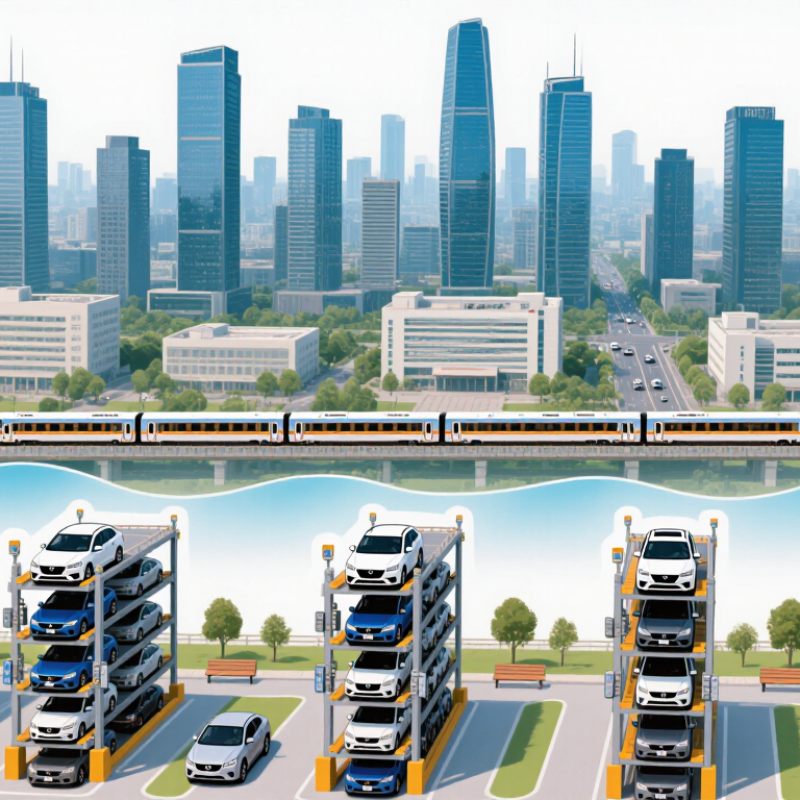
Auto stackers are automated machines that lift, arrange, and retrieve pallets or products. They reduce manual handling and use vertical warehouse space efficiently. Common types include pallet stackers, robotic stackers, crane-based systems, and vertical lift units. Each design suits different loads, aisle widths, and storage heights.
Pallet stackers work well in compact warehouses. Crane systems support high-density storage and controlled retrieval. Robotic models offer flexible movement across changing layouts.
These machines serve manufacturing plants, distribution centers, cold storage facilities, and packaging operations. They can move cartons, drums, components, and standardized pallets. Sensors, barcode readers, and warehouse software help improve tracking accuracy.
However, automation does not remove every operational risk. Uneven floors, unstable loads, or poor software integration can reduce performance. Careful site measurements remain essential for global buyers. A cheaper machine may create higher maintenance costs later.
Tips: Confirm the maximum load, lift height, pallet dimensions, and cycle time before purchasing. Check local safety requirements and available technical support. Ask for testing with your actual products. Small details matter. Leave space for maintenance access. Also review emergency stops, guarding, battery life, and operator training. A universal auto stacker does not really exist; practical fit matters more than impressive specifications.
Selecting the right auto stacker manufacturer requires more than comparing catalog prices. Urban pressure is increasing. UN DESA’s World Urbanization Prospects projects that nearly 68% of people will live in cities by 2050. This makes compact, reliable parking equipment increasingly valuable for hospitals, apartments, and commercial sites.
Evaluate each manufacturer against measurable operating criteria. Check rated vehicle weight, platform dimensions, lifting speed, noise levels, and daily cycle capacity. A system should fit real vehicles, including wide SUVs and uneven loading conditions. Ask for verified safety compliance with relevant machinery and electrical standards, such as EN 14010, ISO 13849, and IEC 60204-1. Emergency lowering, door interlocks, obstruction sensors, and manual recovery procedures deserve close inspection. Small details matter.
Energy performance also deserves attention. The 2023 Global Status Report for Buildings and Construction reported that buildings consumed about 30% of global final energy in 2022. Auto stackers are not the largest users, but standby power and hydraulic efficiency still affect operating costs. Request measured energy data, not marketing estimates. Review software uptime, spare-parts availability, technician response times, warranty limits, and local installation experience. A cheap quotation may look attractive. I still question it when maintenance assumptions are unclear. Visit an operating site if possible, observe a complete parking cycle, and inspect oil leakage, vibration, drainage, and control-panel usability. Manufacturers should provide load tests, risk assessments, service records, and realistic lifecycle-cost calculations. Fancy interfaces cannot compensate for weak after-sales support.
This 100-point evaluation framework helps global buyers compare auto stacker manufacturers without relying on brand names. Safety and compliance, lifting performance, operational throughput, space efficiency, energy use, and after-sales service are assessed as separate procurement dimensions.
The leading auto stacker manufacturers serve different operating conditions. The first specializes in compact parking systems for apartment basements. Its platforms fit narrow lanes and use sensors to reduce reversing errors. The second focuses on heavy-duty steel frames for commercial garages. Its engineers test loading cycles beyond normal daily use. The third develops automated pallet-style stackers for limited urban sites. It provides clear maintenance access, which installers often value. The fourth manufactures hydraulic systems for moderate-capacity facilities. Its strength is steady lifting, although hydraulic noise may require better insulation.
The fifth manufacturer builds electric stackers with low-energy standby modes. It records power consumption during factory trials. The sixth supplies modular equipment for hospitals, offices, and residential projects. Its replacement parts are clearly labeled. The seventh emphasizes corrosion-resistant finishes for humid coastal locations. Surface preparation still needs close inspection. The eighth produces customized systems for irregular floor plans. Its design team uses accurate site measurements before fabrication. Small measurement errors can become expensive.
The ninth manufacturer offers integrated software for access control, fault alerts, and usage records. Its interface is practical, but older users may need training. The tenth focuses on safety engineering, including emergency stops, overload detection, and mechanical locks. Independent inspections strengthen its credibility.
Across these profiles, reliable manufacturers share documented testing, responsive technical support, and transparent installation requirements. Buyers should review warranty terms, local service capacity, and operator training records. No supplier is perfect. Even strong equipment can underperform when drainage, ventilation, or floor strength receives little attention.
Top 10 Auto Stacker Manufacturers for Global Buyers
Global buyers should compare more than lifting capacity. The strongest ten manufacturers usually offer pallet stackers, compact parking systems, and automated storage units for different site conditions. Product comparison should include rated load, lifting height, aisle width, pallet size, and charging method. A 1,500-kilogram unit may suit a warehouse, but not a cold-storage facility with uneven flooring.
Technology separates basic equipment from dependable automation. Look for proportional hydraulic control, obstacle sensors, emergency stopping, battery monitoring, and programmable logic controllers. Remote diagnostics can reduce service delays across time zones. Some systems also connect with warehouse management software through standard communication interfaces. Ask for test videos using your actual pallet dimensions. Brochures can look impressive.
International capability requires stronger evidence. Review export experience, installation teams, spare-parts stock, technical manuals, and operator training. Confirm electrical specifications, machine documentation, and local safety requirements before signing a contract. Manufacturers serving several regions may provide multilingual support and regional service partners. However, global coverage does not guarantee fast repairs. Response times should appear in the service agreement. Request references from facilities with similar temperatures, workloads, and operating hours. Published efficiency figures may be optimistic, so a monitored trial is more reliable. Price matters, but unavailable parts can cost more.
| Rank | Manufacturer Profile | Primary Product Range | Typical Rated Capacity | Typical Lift Height | Drive and Lift Technology | Battery Options | Automation Features | Safety and Compliance Focus | International Capability | Best-Fit Applications |
|---|---|---|---|---|---|---|---|---|---|---|
| 1 | Profile 01 | Electric walkie stackers and rider stackers | 1,000–2,000 kg | 1.6–5.6 m | AC traction motor; electric hydraulic lift; regenerative braking on selected models | Lead-acid and lithium-ion configurations | Password access, programmable travel speed, onboard diagnostics | Emergency stop, anti-rollback, electromagnetic braking, CE-oriented design | Suitable for distributors serving multiple regions; commonly available with multilingual manuals and export documentation | Warehouses, manufacturing lines, retail distribution and short-distance pallet movement |
| 2 | Profile 02 | Counterbalanced electric stackers | 1,200–2,000 kg | 2.5–5.0 m | Counterbalanced chassis with electric traction and hydraulic mast control | Lead-acid, maintenance-free and lithium-ion options | Electronic steering, speed reduction during cornering, battery status display | Load-backrest options, parking brake, operator presence controls | Well suited to containerized export and regional service networks; configuration varies by market | Closed warehouses where outriggers are unsuitable or aisle flexibility is required |
| 3 | Profile 03 | Straddle-leg stackers for standard pallets | 1,000–1,500 kg | 1.6–4.5 m | Electric drive with adjustable straddle legs and hydraulic lift | Lead-acid and lithium-ion battery packs | Fork position adjustment, creep-speed control and diagnostic display | Mechanical load protection, emergency reversing switch and mast safety features | Commonly offered through international material-handling dealers with spare-parts support | Mixed pallet sizes, small warehouses, workshops and loading areas |
| 4 | Profile 04 | Reach stackers and compact reach trucks | 1,000–1,600 kg | 2.7–5.4 m | Electric reach mechanism, AC traction and hydraulic mast operation | Lead-acid and lithium-ion systems | Reach extension, programmable performance modes, digital operating display | Load moment monitoring, tilt control, emergency braking and operator protection | Appropriate for buyers requiring higher-density storage and dealer-based technical support | Narrow aisles, medium-height racking and high-throughput warehouse operations |
| 5 | Profile 05 | Walkie stackers for light and medium-duty use | 800–1,500 kg | 1.6–3.5 m | Electric traction with compact hydraulic lift unit | Sealed lead-acid and lithium-ion options | Simple LED display, battery protection and adjustable travel speed | Emergency stop, automatic parking brake and overload protection | Generally easy to source through local importers; parts availability should be checked before purchase | Small warehouses, workshops, retail backrooms and intermittent material handling |
| 6 | Profile 06 | Heavy-duty electric stackers | 1,500–2,000 kg | 2.5–5.0 m | High-torque AC drive, reinforced mast and electric hydraulic lifting | High-capacity lead-acid or lithium-ion batteries | Multiple operating modes, hour meter, fault-code reporting and fleet-ready interfaces | Overload control, mast interlock, anti-rollback and enhanced braking systems | Suitable for industrial buyers needing shipment support, technical files and replacement components | Metal, paper, beverage, automotive component and general industrial facilities |
| 7 | Profile 07 | Stainless-steel and wash-down stackers | 1,000–1,500 kg | 1.6–3.5 m | Corrosion-resistant chassis with electric drive and hydraulic lift | Sealed lead-acid or lithium-ion battery systems | Protected controls, sealed electrical components and low-maintenance design | Hygienic construction options; certification and ingress protection depend on configuration | Export suitability depends on sanitation requirements, documentation and local electrical regulations | Food processing, cold storage, pharmaceutical and clean production environments |
| 8 | Profile 08 | Initial-lift and rough-floor stackers | 1,200–1,800 kg | 1.6–3.5 m | Initial lift for uneven surfaces; electric traction and hydraulic mast | Lead-acid and lithium-ion options | Reduced-speed control, traction management and programmable lifting functions | Stability protection, automatic braking and enhanced ground-clearance design | Useful for international logistics sites, although floor conditions and climate ratings require verification | Loading docks, ramps, outdoor-to-indoor transfer and uneven industrial floors |
| 9 | Profile 09 | Semi-automated guided stackers | 1,000–1,500 kg | 1.6–4.5 m | Electric stacker platform with camera, laser or magnetic-navigation options | Typically lithium-ion; lead-acid available in selected configurations | Automatic route following, obstacle detection and fleet communication interfaces | Safety scanners, audible warnings, emergency stop circuits and speed zoning | Best for projects requiring systems integration, commissioning and ongoing software support | Repetitive pallet transport between production, storage and dispatch zones |
| 10 | Profile 10 | Warehouse stackers with fleet-management capability | 1,200–2,000 kg | 2.5–5.6 m | AC electric drive, electronic lift control and CAN-bus monitoring | Primarily lithium-ion, with lead-acid alternatives | Fleet telematics, usage monitoring, access control and maintenance alerts | Operator authentication, impact monitoring, speed zoning and service diagnostics | Strong fit for multinational warehouse operators; local data, radio and service requirements must be confirmed | Multi-site logistics, e-commerce fulfillment and high-utilization distribution centers |
Selecting the right auto stacker manufacturer starts with your parking site, not a sales brochure. Measure ceiling height, bay width, floor strength, drainage, and vehicle dimensions. Ask whether the proposed system fits local building codes and electrical standards. A reliable manufacturer should provide load calculations, layout drawings, safety documentation, and test records. Request evidence from comparable installations, preferably in climates similar to yours.
Examine the engineering behind the equipment. Check lifting capacity, platform materials, emergency lowering, sensors, and anti-fall protection. Ask how the system performs during power interruption. Software should offer clear status signals and controlled user access. Operators need practical training, not only a digital manual. Visit an operating site if possible. Watch the platform move. Listen for unusual vibration.
Service quality often decides the real cost. Confirm spare-parts availability, response times, warranty limits, and technician coverage before signing. A low purchase price may hide expensive delays. Compare maintenance schedules and energy use over several years. Ask for a written acceptance procedure with measurable limits. No checklist is perfect. I would still inspect welds, cable routing, and drainage in person. Small oversights can become daily frustrations. Leave room for honest feedback from installers and parking users.
An auto stacker lifts, arranges, and retrieves pallets or products automatically. It uses vertical space and reduces manual handling. Small details matter.
Common types include pallet stackers, robotic stackers, crane-based systems, and vertical lift units. Each design suits different loads, heights, and aisle widths.
They support manufacturing plants, distribution centers, cold storage facilities, and packaging operations. They can move cartons, drums, components, and standardized pallets.
Confirm the maximum load, lift height, pallet dimensions, and required cycle time. Measure floors, aisles, ceiling height, and maintenance access carefully.A cheaper machine may create larger repair costs later. I would not trust impressive specifications without practical testing.
Check emergency stops, guarding, obstruction sensors, door interlocks, and manual recovery procedures. Emergency lowering is also important.Ask for risk assessments and load-test records. Safety can weaken when floors are uneven or loads are unstable.
Many systems use sensors, barcode readers, and warehouse software for tracking. Some connect through standard communication interfaces.Poor integration may cause delays or inaccurate inventory records. Test the connection with real products before purchase.
Standby power, hydraulic efficiency, and battery life affect operating costs. Request measured energy data instead of relying on estimates.Review charging methods and daily cycle capacity. The savings may look smaller than expected.
Review installation teams, spare-parts stock, technical manuals, training, and regional service coverage. Confirm electrical specifications and local safety requirements.Global coverage does not guarantee quick repairs. Put response times in the service agreement.
A site visit shows a complete operating cycle under real conditions. Inspect vibration, oil leakage, drainage, floor quality, and control-panel usability.Ask about similar temperatures, workloads, and operating hours. Brochures can mislead.
Request testing with actual pallets, monitored trial results, service records, warranty limits, and lifecycle-cost calculations. Leave clear space for maintenance.Price matters, but unavailable parts can cost more. I still question unclear maintenance assumptions.
This guide provides a practical overview of the Auto Stacker industry for global buyers. It explains what auto stackers are, introduces common types and configurations, and highlights their applications in warehouses, manufacturing facilities, distribution centers, parking systems, and other material-handling environments. Readers will also learn which factors matter when evaluating manufacturers, including product reliability, load capacity, automation level, safety systems, customization options, after-sales support, compliance, and delivery capabilities.
The article profiles ten leading categories of auto stacker manufacturers without focusing on brand names, then compares their product designs, control technologies, operational efficiency, maintenance requirements, and international service capabilities. It concludes with a structured selection process to help buyers match equipment to their space, workflow, budget, installation conditions, and long-term business goals. By combining technical evaluation with supplier assessment, the guide supports more informed purchasing decisions and helps global buyers identify solutions that offer dependable performance, scalability, and safe operation.
