 Cherish
Cherish
Cherish
Discover our heavy-duty, certified water treatment technologies designed to process municipal sewage, reclaim industrial greywater, and purify high-salinity brackish groundwater across Namibia's regions.
As the most arid country in sub-Saharan Africa, water is Namibia's most precious resource. With highly unpredictable rainfall patterns and deep dependence on underground aquifers, the demand for decentralized Sewage Treatment Plants (STPs) is accelerating rapidly. Namibia's bulk water utility, NamWater, is continuously pushing municipalities, mining concession holders, agricultural developers, and tourism operators to adopt closed-loop water treatment processes.
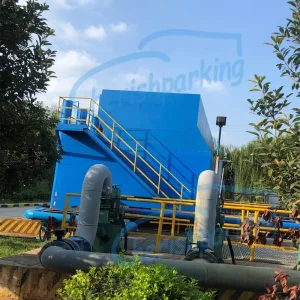
Historically, central systems in hubs like Windhoek, Walvis Bay, and Swakopmund have pioneered reclamation methods, such as the Goreangab Reclamation Plant model. However, local infrastructure in secondary municipalities (such as Okahandja, Rundu, and Gobabis) faces persistent overloading. Packaged sewage treatment systems provide an immediate, modular solution that bypasses municipal grid constraints, purifying wastewater directly at the point of origin for crop irrigation, dust suppression, or sanitary flush recycling.
Namibia's uranium, lithium, and diamond mines operate in sensitive terrains like the Namib Desert. On-site modular wastewater systems allow operations to recycle over 85% of camp runoffs, drastically reducing water tariff overheads.
Sensitive ecological areas near Etosha National Park and Sossusvlei require whisper-quiet, zero-discharge packaged MBR sewage systems. Underground setups prevent groundwater contamination and conserve pristine ecosystems.
As urban sprawl shifts to outskirts, local municipalities struggle with structural sewer infrastructure pipelines. Containerized systems act as scalable treatment plants for new private residential complexes.
To assist local consultants and engineers in determining the ideal engineering setups, the following comparison breaks down system characteristics across Namibia's environmental zones.
| System Technology | Ideal Application Area | Expected Output Quality | Namibia Compliance Code | Maintenance Profile |
|---|---|---|---|---|
| Integrated MBR Package Plants | Eco-lodges, mining base camps, and real estate estates. | BOD < 5 mg/L, TSS < 1 mg/L (Irrigation Safe) | DWA General Standard Effluent Permit | Automated backwash, bi-annual membrane inspections. |
| Ultrafiltration (UF) Reclaimed Water | Urban greywater recycling, process water recovery. | Turbidity < 0.2 NTU, high virus removal | Windhoek Direct Municipal Standard | Fully automated chemical cleanings (CIP) inline. |
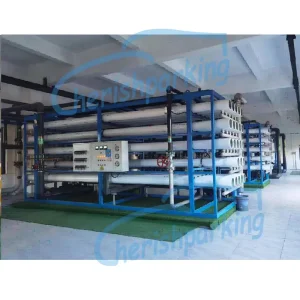
| Reverse Osmosis (RO) Desalination | Coastal communities, high-salinity boreholes. | TDS < 300 mg/L (Potable Drinkable Quality) | SANS 241 / WHO Drinking Water Standard | Requires pre-filtration, anti-scalant dosing control. |
| Aerobic Moving Bed Bio-Reactors (MBBR) | Heavy industrial effluent, food processing sites. | BOD < 20 mg/L, COD < 75 mg/L | Industrial Effluent By-Laws | Low-skill operations, robust to high organic spikes. |
Installing commercial sewage systems in Namibia requires careful alignment with regulatory authorities under the Ministry of Agriculture, Water and Land Reform (MAWLR) and the Department of Water Affairs (DWA). Compliance with the Namibia Water Resources Management Act (Act No. 11 of 2013) is mandatory before discharging any processed effluent back into groundwater aquifers or natural waterways.
For projects in pristine groundwater basins—such as the Stampriet Artesian Basin or the Cuvelai Basin—effluent standards are particularly demanding. Biological Oxygen Demand (BOD) limits must not exceed 20 mg/L, Chemical Oxygen Demand (COD) must be kept below 75 mg/L, and pathogens must be completely deactivated via chlorine dosing, ozone treatment, or UV sterilization. Our manufacturing pipeline integrates heavy-duty UV disinfection chambers and automatic chlorine feed stations into our skid systems to ensure immediate compliance with DWA inspectors.
Additionally, the Environmental Management Act (Act No. 7 of 2007) requires an Environmental Clearance Certificate (ECC) for large-scale wastewater infrastructure. Our engineering team assists Namibian environmental assessment practitioners (EAPs) with structural calculations, operational manuals, and energy footprint data required for formal ECC submissions.
Procuring sewage treatment components and fully packaged systems directly from our modern Chinese manufacturing facility offers distinct technical and financial advantages for Namibian EPC contractors and developers:
Our MBR membranes utilize PVDF reinforced hollow fibers with pore sizes under 0.04 microns, ensuring consistent removal of suspended solids and pathogenic microorganisms without relying on extensive chemical treatment.
Designed specifically for coastal Namibian environments like Swakopmund, our steel container enclosures are constructed from Q235B structural carbon steel lined with marine-grade multi-layer epoxy coatings to resist corrosive sea breezes.
Our logistics network coordinates heavy freight transport directly to the Port of Walvis Bay. Systems are packed inside standard ISO sea-shipping containers, enabling fast customs clearance, inland transport, and plug-and-play installation.
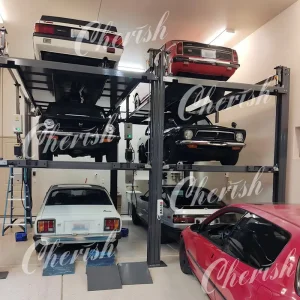
Cherish is a leading global industrial manufacturer dedicated to providing high-quality environmental equipment, automated manufacturing lines, and specialized storage systems to international markets. Over our 15-year history since inception, we have consistently adhered to our core corporate values: Integrity, Innovation, Quality, and Service. Our focus encompasses the research, development, custom manufacturing, and global sales of advanced Wastewater Treatment Equipment, Smart Mechanical Car Parking Systems, and Automated Spray Coating Systems, aiming to generate long-term value for our clients.
Our three primary engineering divisions include:
With ISO 9001 and CE certifications across our core product lines, Cherish guarantees that every machine is engineered for long-term operational durability, underwrite by comprehensive technical support and remote training for our installation partners in Namibia.
Our custom packaged sewage systems are deployed in key Namibian industries to address critical water reuse requirements:
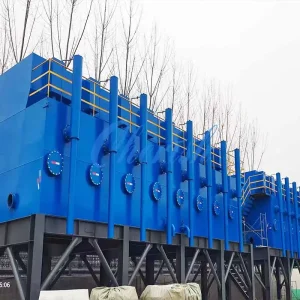
Modular containerized MBR systems process high-strength greywater and blackwater for mineral processing staff camps in remote desert regions. The output water meets DWA requirements for reuse in dust suppression on haul roads.
Zero-odor, underground integrated treatment plants protect sensitive ecosystems. These systems process lodge sanitary discharge into high-quality water for wildlife waterholes, enhancing local safari experiences.
Dissolved air flotation (DAF) and biological systems treat complex food-processing water prior to harbor discharge. These systems ensure compliance with Namport marine water quality regulations.
To discharge treated wastewater in Namibia, the effluent must comply with DWA guidelines. Typically, the General Standard requires Chemical Oxygen Demand (COD) < 75 mg/L, Biochemical Oxygen Demand (BOD) < 20 mg/L, Total Suspended Solids (TSS) < 25 mg/L, and Free Chlorine residuals between 0.1 and 0.5 mg/L. Our plants are designed to meet or exceed these criteria.
Higher ambient temperatures speed up biological action in biological tanks, which can improve treatment efficiency. However, intense heat also increases evaporation rates and can reduce dissolved oxygen levels in the bioreactor. Our biological systems feature automated air blower controls to adjust aeration rates based on water temperature and organic load.
Yes, our containerized MBR plants are designed for low power consumption. They can be integrated with solar PV arrays and battery storage, which is common in off-grid Namibian mining sites and eco-lodges. We optimize motor sizes, utilize energy recovery systems, and program operational cycles to run during peak solar generation hours.
The ocean shipping duration from major Chinese ports (such as Shanghai or Qingdao) to the Port of Walvis Bay is approximately 30 to 45 days. Once on-site, a skid-mounted or containerized plant can be connected to inlets, outlets, and power supplies, and commissioned within 5 to 10 working days under remote guidance from our engineering team.
Our PVDF membranes require automated backwashing using permeate water every 10–12 minutes. Depending on feed water parameters, chemical cleaning in place (CIP) using chlorine and citric acid is performed 2 to 3 times per year. The membrane lifespan averages 5 to 8 years under standard operational conditions.
Our engineering line provides heavy-duty wastewater treatment components, commercial laundry recycling loops, specialized remote camp systems, and industrial mechanical parking and coating systems.
Get a comprehensive water balance consultation, customized layout CAD files, and a factory quotation delivered to your company. We support Namibian developers and mining agencies.
Send Inquiry Now